Import a Toyota Alphard from Japan to Kenya: Verify Export Records
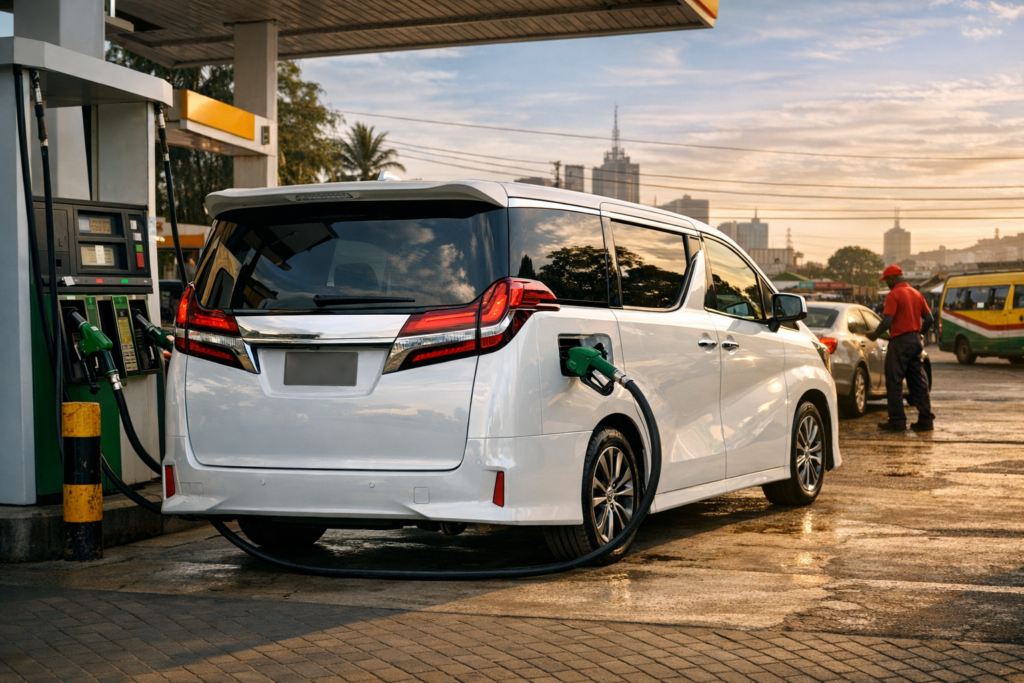
To import a Toyota Alphard from Japan to Kenya, check Kenyan eligibility before bidding, then verify the Japanese export record and the inspection certificate required for the route. Japan is a major source market for Alphards, but a low auction price or clean-looking grade does not establish roadworthiness, ownership or import compliance.
KRA’s current guidance sets an eight-year age limit for used imports, calculated from the year of manufacture or first registration. It also requires right-hand drive and a pre-shipment roadworthiness certificate. The eligible year cutoff advances over time, so confirm the exact vehicle and chassis number with KRA and KEBS before bidding.
What must you check before bidding on a Japanese Alphard?
| Check | Ask for |
|---|---|
| Kenyan eligibility | First-registration/manufacture details, right-hand-drive confirmation and written confirmation of the applicable KEBS inspection route. |
| Vehicle identity | Chassis/VIN on the car, auction or inspection records, invoice and Japanese export certificate. |
| Condition | Original auction sheet where available, translated notes, dated inspection photos and an independent condition report. |
| Export documents | Commercial invoice, Japanese registration deletion/export certificate and the shipping and inspection records needed for Kenyan clearance. |
How to assess an Alphard at a Japanese auction
Before placing a bid, get the chassis number, model code, first-registration date, mileage and the complete auction sheet. Have someone who understands the auction notation translate the condition and repair marks. Treat the sheet as one piece of evidence, not a warranty: request current photographs and an independent inspection, especially if the car has been repaired or resprayed.
Ask the inspector to check chassis rails and underbody for damage or corrosion, panel alignment, warning lights, transmission operation, suspension, tyres, brakes, air conditioning and electrical equipment. For a hybrid, request diagnostic results and a battery health assessment. Match odometer readings against service, auction and inspection records. Stop if the VIN, grade, mileage or description differs across documents.
Which Japanese export documents should you receive?
Japan Customs says a registered vehicle intended for export needs registration deletion and a Certificate of Registration Deletion obtained through the relevant transport office. Ask the exporter for the export/deregistration certificate, sale invoice and packing/shipping records, and make sure the names, chassis number and vehicle details agree. The exact paperwork can depend on whether the vehicle was registered or already deregistered when sold.
Kenyan clearance also needs its own records. KRA’s motor vehicle import procedure lists documents such as the commercial invoice, original logbook from the country of importation cancelled at origin, bill of lading and pre-shipment inspection certificate. Confirm the required originals with your clearing agent before the vessel is booked. A Japanese export certificate does not replace Kenya’s inspection or customs requirements.
How do KEBS inspection and shipping fit together?
Used vehicles entering Kenya are subject to KEBS conformity requirements. Ask KEBS or its currently appointed vehicle-inspection agent which Japan inspection and certificate apply to the car, and obtain that answer before shipping. Keep the inspection certificate and export documents with the original invoice and bill of lading. If a supplier proposes destination inspection instead, confirm that the vehicle and its paperwork qualify under the current KEBS procedure before agreeing.
Request an itemised shipping quotation that identifies the port, shipping method, insurance cover, inspection charges, documentation fees and what happens if the vehicle is delayed. Transit time depends on sailing schedules, transshipment and clearance, so use a dated written estimate from the forwarder rather than a general online promise.
How should you estimate the full import cost?
Budget for the auction or purchase price, auction/export charges, inland transport in Japan, inspection, freight and marine insurance, Kenyan taxes and levies, port handling, clearing-agent charges, registration and any repairs. Ask a Kenyan clearing agent to estimate taxes using the vehicle’s exact model, year, engine and customs value, and check current KRA guidance. Do not use the old percentages or broad price ranges copied into older online articles as a final quote.
Documents to keep together
- Signed sale invoice and payment record
- Japanese export or registration-deletion certificate
- Auction sheet and independent condition/diagnostic report
- KEBS roadworthiness or conformity certificate for the approved route
- Bill of lading, insurance and freight documents
- KRA customs entries and clearance documents
Frequently asked questions
Does a good Japanese auction grade guarantee a sound Alphard?
No. Verify the auction sheet and chassis number, then arrange an independent inspection. Ask about repair history, odometer consistency and hybrid battery condition where applicable.
Can I import a left-hand-drive Alphard into Kenya?
KRA’s ordinary used-vehicle guidance requires right-hand drive. Check the exact vehicle against current KRA requirements before bidding; do not assume a special exception applies.
Do Japanese export papers replace KEBS inspection?
No. Export and deregistration records identify the vehicle and its export status. Confirm the separate KEBS pre-shipment inspection and certificate required for Kenyan entry.
Compare available Alphards with SilverTorque Motors
If you are comparing an import with a vehicle already in Kenya, review current inventory or contact the team to discuss condition and paperwork. You can also message SilverTorque Motors on WhatsApp.