Toyota Alphard from India to Kenya: Import Guide (2026)
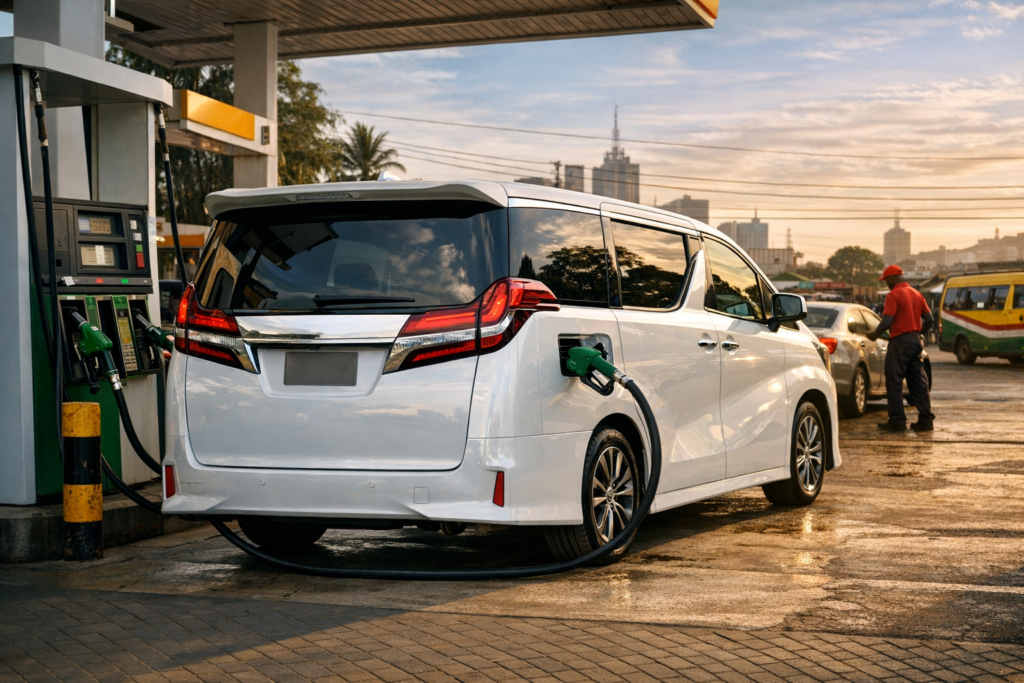
This guide to importing a Toyota Alphard from India to Kenya explains Kenya eligibility, inspection, export paperwork and landed-cost checks. Before paying a deposit, verify the exact car’s steering position, first-registration date, VIN and ownership records. The country where a seller operates does not prove where the vehicle was built or which specification it has.

Check Kenya’s used-vehicle eligibility rules
KRA’s published motor-vehicle procedure requires a used import to be less than eight years old from its year of first registration, right-hand drive and compliant with applicable KEBS requirements. Verify the date on the original registration records and have a licensed clearing agent confirm the age calculation against current rules. India commonly has right-hand-drive stock, but market convention does not prove the steering layout of an individual car. Verify the dashboard and VIN-linked specification directly before paying. Confirm the steering wheel and VIN-linked specification on the actual car; a listing title, model year or conversion promise is not sufficient. Review KRA’s motor-vehicle import procedure before committing funds. For a standard import arriving in 2026, verify an original first-registration date of 2019 or later; manufacture year and advertised model year are not substitutes. Confirm the age calculation with a licensed customs clearing agent before payment.
Confirm the KEBS inspection route for India
KEBS’s current QISJ list does not name India. Ask KEBS which document-validation and destination-inspection steps apply to this shipment, and confirm the requirements and current charges in writing before dispatch. KEBS PVoC Manual Version 15 (19 February 2026) sets destination inspection for used vehicles from countries without an appointed contractor at 0.6% of approved customs value, with a USD 300 minimum and USD 3,500 maximum per vehicle unit or consignment; testing fees may apply. Confirm applicability and amount with KEBS before shipping.
KEBS’s current used-vehicle contractor list names Japan, UAE, Thailand, Singapore, South Africa and the UK within the QISJ arrangement. For other export origins, ask KEBS to state the document validation and destination-inspection process that applies. Check the live KEBS used-vehicle contractor list and destination-inspection guidance; arrangements and fees may change. The route depends on export arrangements, not simply the brand’s manufacturing country.
Check the India vehicle and export file
For India, verify registration, ownership and export permissions, then match VIN and engine details across the invoice and shipping papers. Confirm RHD on the actual car. Request dated photos of the VIN/chassis stamping, odometer, dashboard and title/registration. Search for accident or write-off history, flood/fire damage, liens, mileage inconsistencies and service gaps. Match the VIN, seller/exporter, invoice, dates and declared price across records. If the car passed through another market, document that ownership and export chain too.
From 1 September 2026, KRA says importers must obtain and retain an export declaration, export entry, customs export certificate or equivalent document from the country of export for at least five years. Keep it with supporting records. KRA’s notice covers Certificate of Origin rules for imported goods and identifies used motor vehicles among categories needing case-specific treatment; ask the clearing agent what applies to this entry. Read KRA’s 2026 import-document guidance and KRA’s Certificate of Origin notice.
Inspect the exact Toyota Alphard
For a Toyota Alphard, confirm the model/chassis code, powertrain, seat layout and trim. Check sliding-door operation and safety sensors, inspect hybrid-battery health and inverter cooling where fitted, and test the transmission under load. Verify airbags, seat rails, cameras and service records against the exact grade. A market-specific guide cannot confirm the condition of an individual car. Match VIN, engine/model code and trim to the official documents, commission an independent inspection and retain a written report with scan results and repair photos.
| Area | What to verify |
|---|---|
| Identity and powertrain | Match generation, engine or hybrid system, transmission and drivetrain to the chassis code and VIN-linked specification. |
| Hybrid system | Where fitted, scan battery and inverter faults, inspect cooling components and review battery health data under load. |
| Sliding doors and seating | Cycle each power door and latch; inspect rails, sensors, seat tracks and third-row folding mechanisms. |
| Chassis and safety | Check for structural repair and suspension wear; scan airbags, ABS, cameras and driver-assistance systems fitted to this trim. |
Do not ship if the seller refuses a reasonable independent inspection, VIN records conflict, or steering and age eligibility remain unclear. An inspection certificate does not guarantee that a vehicle meets every KRA import condition.
Prepare the complete import file
Before dispatch, collect the original title/registration, ownership evidence, dated invoice, official export or deregistration document, export customs declaration or equivalent, inspection certificate where required, shipping instructions and bill of lading. Ask the exporter and clearing agent which records must be original, certified or translated. Resolve differences in VIN, names, dates, engine details and declared value before the car is loaded.
Keep proof of payment and correspondence with the exporter. A commercial invoice or vehicle-history report is not a replacement for the official export record. Confirm the applicable Certificate of Origin documentation with KRA or the clearing agent for your exact import entry.
Estimate the full landed cost
Prepare a dated calculation covering purchase/auction price, inland transport, inspection, export handling, freight, marine insurance, port and shipping-line fees, customs valuation and taxes, clearing, registration and delivery. Enter the exact engine size, first-registration date, model details and declared value in the KRA Automotive Calculator, then obtain an itemised quote from a licensed clearing agent. Customs valuation, tax treatment and service fees may change, so avoid old generic percentages or quotes that omit port and registration costs.
Use this pre-purchase checklist
- Confirm first-registration age, RHD layout, VIN and matching ownership documents.
- Ask KEBS in writing which inspection route, certificate, timing and fees apply.
- Get an independent condition report for the exact vehicle and its equipment.
- Secure official export customs records and confirm five-year retention.
- Compare total landed cost with a suitable car already in Kenya before a non-refundable deposit.
Frequently asked questions
Can I import any Toyota Alphard from India into Kenya?
No. The exact vehicle must meet the current first-registration age limit, be right-hand drive and roadworthy, and follow the correct KEBS route with acceptable ownership and export documents.
Which KEBS inspection route applies to a Toyota Alphard exported from India?
KEBS does not list India among current QISJ used-vehicle origins. Ask KEBS to confirm the document-validation and destination-inspection steps for this shipment before dispatch.
What should I verify before buying a Toyota Alphard in India?
Confirm the VIN, steering position, first-registration date, title and export eligibility, then arrange an independent inspection. For a Toyota Alphard, confirm the model/chassis code, powertrain, seat layout and trim. Check sliding-door operation and safety sensors, inspect hybrid-battery health and inverter cooling where fitted, and test the transmission under load. Verify airbags, seat rails, cameras and service records against the exact grade.
What export documents should I keep for a car imported into Kenya?
Retain the original registration/title, proof of ownership, invoice, export or deregistration record, inspection certificate where required and shipping papers. From 1 September 2026, KRA requires an export declaration, export entry, customs export certificate or equivalent from the country of export and at least five years of record retention.
Compare import and local options
Before shipping, have the VIN, first-registration date, steering position and export file checked against current rules. You can browse SilverTorque Motors’ current inventory or message the team with the exact vehicle details.